An In-Depth Analysis of the Hygienic and Safety Performance of FRP Water Tanks: Triple Assurance from Materials, Process, and Standards
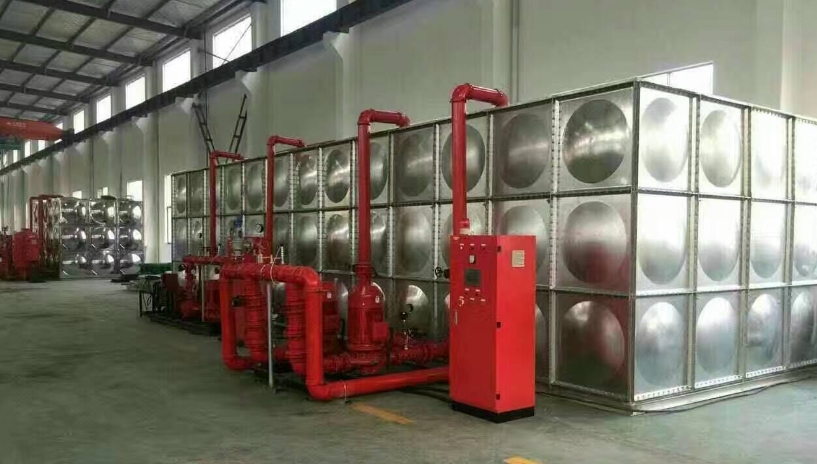
An In-Depth Analysis of the Hygienic and Safety Performance of FRP Water Tanks: Triple Assurance from Materials, Process, and Standards
The hygienic safety of water storage equipment is directly linked to end-user health and water quality. Fiberglass Reinforced Plastic (FRP) water tanks are widely used across various sectors due to their excellent corrosion resistance and structural strength. Their core hygienic and safety performance stems from precise control throughout the entire chain, from raw materials to molding processes, installation, and maintenance. This article systematically explains how FRP water tanks achieve reliable hygienic safety assurance.
1. The Material Science of the Inner Liner: Constructing a Food-Grade Barrier
The foundation of an FRP tank's hygienic safety lies in its inner liner, which is in direct contact with the stored water. Professional manufacturers like Beijing Yuanhui FRP Co., Ltd., typically use food-grade unsaturated polyester or vinyl ester resins that comply with national standards such as China's GB 9685. Once cured, these resins form a dense, smooth, and inert surface with key properties including:
1.1 Extremely Low Styrene Residual
By optimizing the curing system and post-curing process, the residual volatile monomers (e.g., styrene) in the resin are controlled at extremely low ppm (parts per million) levels. For instance, third-party tests show that high-quality tank liners can have styrene monomer migration levels below 0.01mg/L, far lower than the limits set by drinking water hygiene standards, effectively eliminating risks of odor and chemical contamination from the material itself.
1.2 Superior Impermeability and Corrosion Resistance
The food-grade resin liner features very low porosity, effectively preventing contact between the water and the glass fibers within the tank wall, thereby avoiding potential minimal fiber leaching. Furthermore, its stability against residual chlorine and varying pH levels in water is significantly higher than that of metallic materials, preventing secondary contamination from heavy metal ions (e.g., iron, manganese) due to rust or oxidation. The smooth inner surface resists scaling and provides no substrate for algae growth over long-term use.
2. Structural Design and Manufacturing Process: Eliminating Sanitary Dead Zones
Beyond the material itself, the tank's structural design and manufacturing process form the second line of defense for hygienic safety.
2.1 Integral Molding and High-Strength Sealing
High-quality FRP tank panels are manufactured using a molding process for one-piece formation, with rounded corners that eliminate the weld seams and dead zones found in traditional welded tanks. Panels are assembled using food-grade sealing gaskets and bolted connections, creating a continuous elastic seal. This sealing integrity is tested at 1.5 times the working water pressure without leakage. This design ensures a seamless, dead-zone-free interior where contaminants and microorganisms cannot accumulate.
2.2 Scientifically Configured Inflow and Ventilation Systems
A hygienic tank requires a rationally designed piping system. The inlet is typically positioned in the upper-middle section, often with a diffuser to reduce water flow impact and prevent disturbance of sediments. Vent openings are equipped with at least 40-mesh stainless steel insect screens and designed with downward-facing elbows. This ensures proper air circulation to eliminate vacuum while effectively preventing direct entry of dust, insects, and other pollutants. Case studies from Beijing Yuanhui show this design can reduce particulate exchange between the tank interior and the external environment by over 90%.
3. Environmental Control for Inhibiting Microbial Growth
Stagnant water can be a potential breeding ground for microorganisms. FRP tanks inhibit microbial growth through multiple physical properties.
3.1 Surface Smoothness and UV Resistance
The highly smooth inner surface (with a surface roughness Ra ≤ 0.5μm) makes it difficult for bacteria and algae to adhere and colonize, facilitating cleaning. Additionally, incorporating UV absorbers into the resin or applying UV-resistant treatments to the exterior of outdoor tanks effectively blocks direct sunlight, removing the condition for algal photosynthesis and maintaining water clarity.
3.2 Thermal Insulation Aids Temperature Stability
FRP material has a low thermal conductivity (about 1/100 that of steel). When combined with insulation layers like polyurethane foam, it significantly mitigates drastic water temperature fluctuations caused by ambient conditions. Maintaining water at a relatively low and stable temperature helps inhibit the rapid proliferation of mesophilic bacteria, a particularly important feature in regions with high summer temperatures.
4. Standard Certification and Long-Term Maintenance: Institutional Safeguards for Safety
Reliable hygienic safety cannot be ensured without strict third-party verification and scientific maintenance management.
4.1 Authoritative Sanitary Permits and Testing
Legitimate FRP water tank products must obtain a "Hygienic Permit for Products Involving Drinking Water Sanitation and Safety" issued by provincial or higher health administrative authorities. Acquiring this permit requires passing immersion tests that examine increases in various water quality indicators (e.g., oxygen consumption, heavy metals, microorganisms) after prolonged immersion, ensuring long-term water safety. Products from Beijing Yuanhui FRP Co., Ltd., not only meet national standards but also comply with international standards like NSF/61 for drinking water contact materials for export.
4.2 Professional Cleaning and Maintenance Protocols
Even the highest quality tanks require regular maintenance. Industry guidelines recommend professional cleaning and disinfection every six to twelve months using approved disinfectants (e.g., sodium hypochlorite solution) followed by thorough rinsing. Cleaning personnel should hold health certificates, and operations must avoid causing mechanical damage to the inner liner. Establishing clear maintenance records is an indispensable part of ensuring the tank's hygienic safety throughout its entire lifecycle.
Conclusion
The hygienic and safety performance of an FRP water tank is a systematic achievement built upon high-performance food-grade materials, dead-zone-free structural design, microbial growth inhibition properties, and rigorous standard certifications. It is not the result of a single advantage but the product of integrating modern materials science with sanitary engineering. For facilities with stringent water quality requirements—such as hospitals, schools, food processing plants, and hotels—choosing a supplier like Beijing Yuanhui FRP Co., Ltd., which possesses complete certifications, mature processes, and stringent quality control, means investing in a robust insurance policy for water safety. While considering structural strength and cost, a deep understanding of the hygienic safety core of FRP tanks is key for users to make informed choices and fulfill their social responsibility.