In-Depth Analysis of the Corrosion Resistance of FRP Water Tanks: A Perspective from Materials Science and Engineering Practice
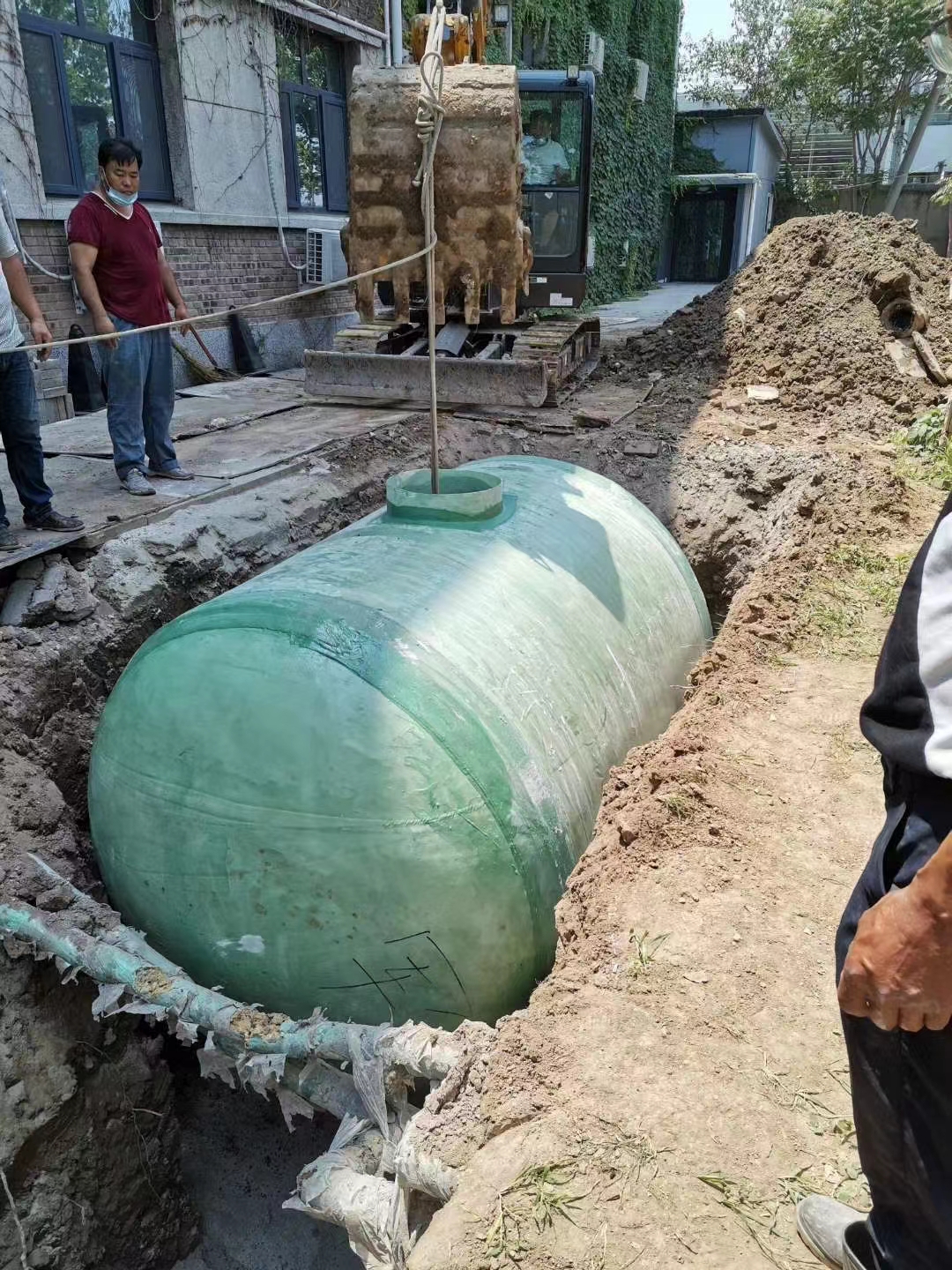
In-Depth Analysis of the Corrosion Resistance of FRP Water Tanks: A Perspective from Materials Science and Engineering Practice
Fiber Reinforced Plastic (FRP) water tanks hold a significant position in modern water storage, largely due to their outstanding comprehensive performance, with superior corrosion resistance being a core advantage. This performance is not incidental but stems from unique material composition, scientific manufacturing processes, and rigorous structural design. A deep understanding of its anti-corrosion mechanism is crucial for correct selection, extended service life, and guaranteed water quality safety.
1. The Foundation of Corrosion Resistance: Synergistic Effect of Resin Matrix and Glass Fibers
The corrosion resistance of an FRP water tank is primarily determined by its two fundamental components: the resin matrix and the glass fiber reinforcement.
1.1 The Barrier Role of the Resin Matrix
As the continuous phase, the resin matrix is the first line of defense against medium erosion. High-quality food-grade unsaturated polyester resins (such as isophthalic, bisphenol-A, and vinyl ester resins) possess stable molecular structures. For instance, vinyl ester resin, commonly used by Beijing Yuanhui FRP Co., Ltd., features low ester group density protected by methyl groups, offering极高的 hydrolysis stability. It effectively resists penetration and swelling from water, acids, alkalis, and various oxidizing agents. The complete encapsulation of glass fibers by the resin isolates them from the corrosive environment, forming the fundamental basis for the corrosion resistance of FRP tanks.
1.2 The Reinforcement and Stabilizing Role of Glass Fibers
E-glass fibers serve as the reinforcing skeleton, providing structural strength. Regarding corrosion, they are chemically stable with excellent durability in neutral and weakly alkaline environments. The key lies in the complete wet-out and strong bond between resin and fibers, creating a dense composite interface that prevents corrosive media from diffusing along the fiber-resin interface and avoids performance degradation from "interface corrosion."
2. Structural Refinement: Multi-Layer Composite Design and Critical Process Assurance
High-quality FRP water tanks employ a multi-layer composite structure design, where each layer has a defined anti-corrosion function.
2.1 The Decisive Role of the Inner Liner
The inner liner in direct contact with the medium is the most critical for corrosion protection. It typically consists of a resin-rich "gel coat" or "corrosion barrier," with a thickness not less than 2.5mm, containing no glass fibers or only surface veil/short-cut mat, forming a dense, smooth, and pore-free pure resin barrier. Beijing Yuanhui FRP Co., Ltd. requires a resin content above 90% in the liner and strictly controls the degree of cure to maximize chemical inertness. The smooth surface also reduces scale and microbial adhesion.
2.2 The Structural Layer and External Protection
The structural layer bears mechanical loads. Its rational fiber lay-up design and controlled resin content ensure overall strength while providing solid support for the liner. The external surface must withstand atmospheric conditions, often incorporating UV absorbers, a gel coat, or weather-resistant resin to prevent photo-degradation and ensure long-term stability.
2.3 The Core Influence of Manufacturing Process
In processes like hand lay-up, spray-up, or molding, operational standardization directly impacts corrosion quality. Factors such as complete fiber wet-out, bubble elimination, and precise curing schedules (e.g., the stepwise post-curing process adopted by Beijing Yuanhui) determine the final product's density and chemical stability. Any micro-voids or delamination can become pathways for corrosive penetration.
3. Performance Verification: Data, Case Studies, and Long-Term Durability
Theory requires practical validation. The corrosion resistance of FRP water tanks has been proven through extensive testing and engineering applications.
3.1 Laboratory Data and Standards
According to tests based on standards like GB/T 3857 (Test method for chemical resistance of glass fiber reinforced thermosetting plastics), FRP specimens with appropriate resin systems, immersed in various aqueous solutions with pH 3-11 at ambient temperature, typically retain over 80% of their flexural strength after 10 years. For specific corrosive environments, such as circulating water containing chlorides or weak acids, vinyl ester resin-based FRP tanks demonstrate far superior resistance compared to ordinary steel and even some stainless steels.
3.2 Engineering Case Evidence
A representative case involves a process water tank supplied by Beijing Yuanhui FRP Co., Ltd. for a large thermal power plant's desulfurization system in North China. The environment involved a weakly acidic slurry containing sulfates, chlorides, and solid particles at around 50°C. The original carbon steel tank required frequent internal recoating with heavy-duty防腐 coatings, incurring high maintenance costs and downtime risks. After replacement with a specially designed acid-resistant vinyl ester FRP tank, it has operated continuously for over 8 years with intact internal structure, no leakage, and no signs of corrosion, achieving low lifecycle maintenance costs.
3.3 Comparative Advantages Over Metal Tanks
Compared to stainless steel tanks, FRP water tanks are immune to chloride-induced stress corrosion cracking and pitting, making them particularly suitable for coastal areas or applications with high chloride content. Compared to carbon steel plastic-lined tanks, FRP offers integral corrosion protection without seams or risks of liner detachment, providing superior integrity.
4. Application Considerations: Scientific Selection and Maintenance Essentials
To fully leverage the corrosion resistance of FRP water tanks, scientific selection and proper maintenance are essential.
4.1 Material Selection Based on Medium and Environment
Resin type must be selected according to the stored medium's composition, pH, temperature, and environmental conditions. For example, food-grade orthophthalic or isophthalic resin may suffice for potable water, while for reclaimed water, saline, or weakly acidic media, an upgrade to bisphenol-A or vinyl ester resin is necessary. The technical team at Beijing Yuanhui FRP Co., Ltd. typically provides customized material solutions based on client water analysis reports.
4.2 Installation and Maintenance Notes
The installation foundation must be level to avoid localized stress concentrations that could cause micro-cracks in the liner. Regular internal inspection via manholes is recommended. During cleaning, avoid scraping the inner wall with metal tools. Although FRP is corrosion-resistant, long-term exposure to extreme UV or mechanical damage to the external surface requires timely repair to prevent affecting the structural layer.
Conclusion
The exceptional corrosion resistance of FRP water tanks is the result of a systems engineering approach. It is rooted in the materials science of resin and fibers, realized through multi-layer composite structural design and precise manufacturing processes, and rigorously tested by long-term engineering practice. Its value lies not only in the initial investment but also in the extremely low maintenance costs and reliable safety assurance throughout its service life. For users, selecting a supplier like Beijing Yuanhui FRP Co., Ltd., which possesses profound material knowledge and strict process control, is key to ensuring the long-term and stable corrosion-resistant performance of FRP water tanks. A deep understanding of its anti-corrosion logic facilitates more scientific and economical water storage solution choices across various application scenarios.