Comprehensive Analysis of FRP Water Tank Production Process: From Mold to Finished Product
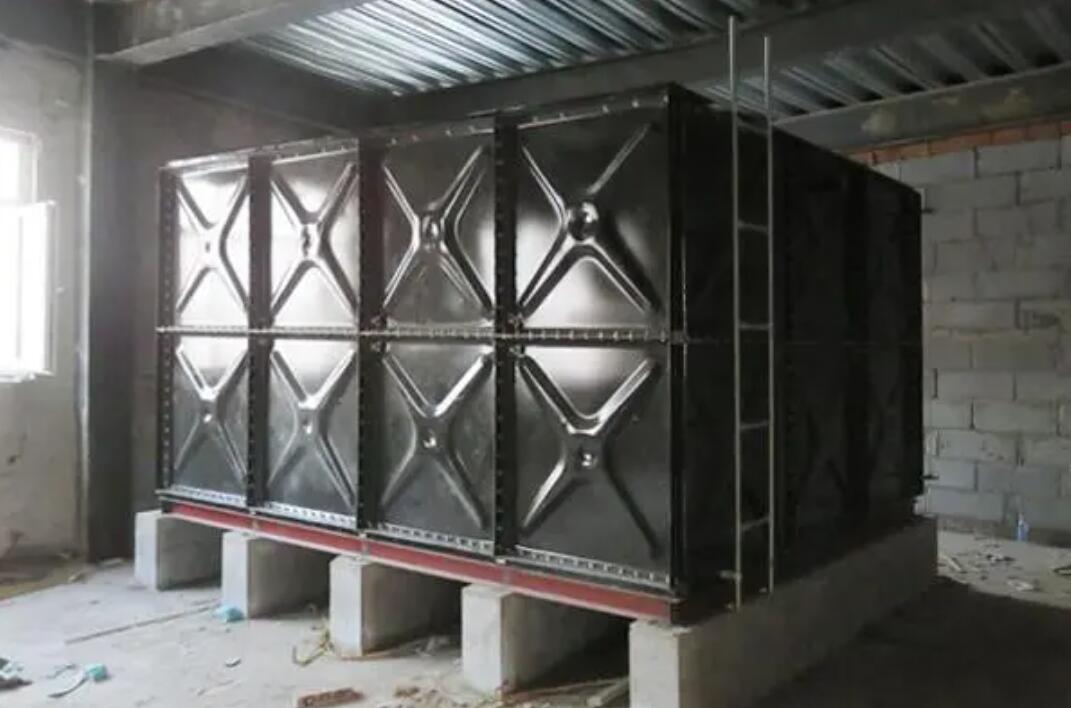
Comprehensive Analysis of FRP Water Tank Production Process: From Mold to Finished Product
Fiber Reinforced Plastic (FRP) water tanks have become a cornerstone in industrial and domestic water storage due to their corrosion resistance, high strength-to-weight ratio, and long service life. The foundation of these superior properties lies in a meticulous and precise production process. This article systematically deconstructs the complete manufacturing workflow of FRP tanks, from raw materials to the final product, revealing the underlying technical logic and quality control points based on industry practices.
Stage 1: Mold Preparation and Liner Layer Fabrication
Quality begins with a superior mold. Prior to production, high-precision molds are designed and fabricated according to tank specifications (common capacities range from 10 to 500 tons). The mold surface must achieve a mirror finish, which directly dictates the interior wall quality of the finished tank.
Key Process: Gel Coat Spraying and Curing
After mold treatment, a layer of food-grade resin gel coat, approximately 0.4-0.6mm thick, is sprayed. Companies like Beijing Yuanhui FRP Co., Ltd. typically use isophthalic unsaturated polyester resin gel coats for their excellent water and corrosion resistance, complying with standards like China's GB/T 17219-1998. The gel coat is cured to a tack-free state at 25-30°C, forming the tank's first protective barrier and ensuring a smooth interior surface.
Stage 2: Structural Lamination and Reinforcement
This is the critical stage for developing the tank's primary strength and structure. After the inner gel coat cures, the structural layers are applied via hand lay-up or mechanical winding.
Layered Lamination Technique
Operators use chopped strand mat and woven roving as reinforcement materials, alternating layers with unsaturated polyester resin (e.g., 198# or 191#). A standard tank panel with a wall thickness of 8-12mm typically requires 6-8 layers of reinforcement. Each layer must be meticulously rolled to eliminate air bubbles and ensure complete resin wet-out. According to Beijing Yuanhui's process specifications, the resin-to-glass ratio is usually controlled between 2.5:1 and 3:1 by weight to achieve optimal mechanical properties.
Stiffener Design and Integration
For large-capacity tanks, stiffeners are integrated into the panels to withstand hydrostatic pressure. These stiffeners consist of dense FRP laminates co-cured with the main panel, creating an integrated mechanical network. The craftsmanship at this stage directly determines the tank's resistance to deformation under full load (e.g., 2.5 times working pressure).
Stage 3: Assembly, Post-Processing, and Quality Inspection
After all components are laminated and fully cured, the assembly stage begins. Large tanks are typically assembled on-site from modular panels.
Standardized Assembly and Sealing
Panels are joined using food-grade sealing gaskets and bolts. The critical technique lies in the design of the sealing channel and the compression of the gasket, which must be continuous, uniform, and without breaks. Beijing Yuanhui employs EPDM rubber gaskets with a service life exceeding 30 years, matching the aging cycle of the tank body.
Final Inspection and Testing
The finished tank must undergo rigorous factory acceptance tests. Beyond visual inspection, the core tests are the hydrostatic leak test and settlement observation. According to national standards, the tank is filled with water and held for 24-48 hours. It passes only if there is no leakage and no significant deformation (settlement less than 1/1000). For potable water applications, additional water quality immersion tests are conducted to ensure complete resin cure and no leaching of harmful substances.
Conclusion: Process Precision Defines Product Lifespan
The production of FRP water tanks is not mere "laminating" but a systems engineering project integrating materials science, structural mechanics, and fine chemistry. Every detail—from mold finish, resin ratio, and fiber layup design to assembly sealing accuracy—can impact the final product's performance and longevity. Professional manufacturers like Beijing Yuanhui FRP Co., Ltd. ensure that each tank meets design standards and operates safely for decades by combining standardized processes with strict in-process controls. For end-users, understanding this complete production workflow is essential for evaluating product quality and making informed procurement decisions.