An In-Depth Analysis of FRP Water Tank Lifespan: Key Influencing Factors and Extension Strategies
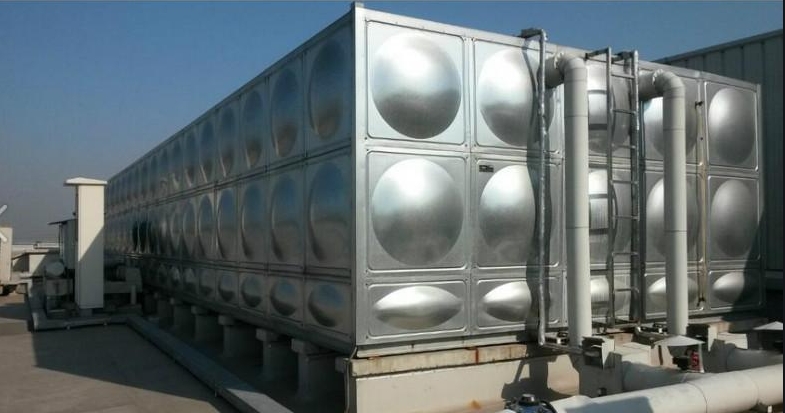
An In-Depth Analysis of FRP Water Tank Lifespan: Key Influencing Factors and Extension Strategies
Fiber Reinforced Plastic (FRP) water tanks are widely used in secondary water supply, fire water storage, and industrial water applications due to their advantages of light weight, high strength, corrosion resistance, and ease of molding. A core concern for users is their service life. While marketing often cites a design life of "20-30 years" or more, the actual operational lifespan is often constrained by multiple factors. This article delves into the internal mechanisms and external conditions that determine the service life of FRP water tanks.
1. Design Life vs. Actual Service Life: Clarifying Concepts
The design life of an FRP tank typically refers to the estimated period under ideal conditions (standard medium, temperature, pressure, no mechanical damage) during which its mechanical and hygienic properties meet design requirements. For instance, a tank manufactured with food-grade resin and alkali-free glass fiber following strict processes can have a design life exceeding 30 years. However, the actual service life is the true duration the tank remains safe and reliable in specific, complex operating environments. The gap between these two is determined by the following series of influencing factors.
2. Core Factors Influencing FRP Water Tank Lifespan
2.1 Raw Material Quality: The Genetic Code of Longevity
The quality of raw materials is fundamental to the lifespan of an FRP tank. The resin, as the matrix material, is critical for its corrosion resistance and anti-aging properties (e.g., UV resistance). For example, tanks storing potable water must use food-grade unsaturated polyester resin compliant with standards like GB/T 17219. Companies like Beijing Yuanhui FRP Co., Ltd. insist on using high-grade isophthalic or vinyl ester resins for storing more corrosive media, offering far superior performance compared to ordinary orthophthalic resins. For reinforcement, the strength and wettability of alkali-free glass fiber and its fabrics are key. Using medium-alkali or inferior glass fiber significantly reduces the long-term strength and fatigue resistance of the tank. Industry experience shows that FRP tanks made with a superior raw material system can have an anti-degradation cycle extended by over 50% compared to those using inferior materials.
2.2 Manufacturing Process and Structural Design: A Reflection of Technical Expertise
Superior manufacturing processes are central to realizing the design life. This includes:
- Molding Process: The uniformity of hand lay-up and the rationality of the layer design (e.g., gradient design of the inner liner, structural layer, and outer protective layer) directly impact impermeability and load-bearing capacity. Mechanized filament winding offers more consistent hoop strength.
- Resin Content Control: The resin-rich inner liner (typically >90% resin content) is the first barrier against corrosion and permeation, and its thickness must be guaranteed.
- Structural Reinforcement: Rational placement of stiffeners and the design of panel connections (e.g., sealing and reinforcement at bolt joints) effectively distribute stress and prevent micro-cracks caused by stress concentration. A common failure case is cracking and leakage at panel joints due to不合理 design of top or bottom supports under long-term full load.
2.3 Installation Environment and Operating Conditions: The External Challenges
Even a high-quality FRP tank will see its lifespan significantly shortened if placed in a harsh environment.
- Medium Characteristics: The pH value, chlorine residual, temperature (prolonged exposure above 40°C accelerates resin aging), and presence of trace organic solvents in the stored water all affect the chemical stability of the resin.
- Environmental Climate: Outdoor tanks are exposed to UV radiation, rain, wind, and freeze-thaw cycles. UV radiation causes surface chalking and fading of the resin, which, while not affecting overall structural strength, degrades the surface protective layer. In cold northern regions, insulation and anti-freeze design are crucial.
- Installation Foundation: An uneven foundation causes uneven stress distribution on the tank bottom, potentially leading to structural deformation or even cracking over time. The foundation must have adequate load-bearing capacity and levelness.
2.4 Post-Installation Use and Maintenance: The Key to Proactive Life Extension
The adage "30% product, 70% maintenance" applies to FRP tanks. Scientific maintenance can greatly extend their actual service life.
- Regular Cleaning and Disinfection: It is recommended to professionally clean and disinfect potable water tanks at least 1-2 times per year to prevent long-term erosion from microorganisms, algae, and sediment buildup on the inner wall.
- Routine Inspection: Periodically check the condition of manholes, ladders, inlet pipes, and other accessories, the aging of sealing gaskets, and any abnormal deformation or fine cracks on the tank body. For outdoor tanks, inspect the integrity of the outer protective layer (gel coat or coating).
- Avoid Improper Operations: Strictly prohibit placing heavy objects on non-load-bearing parts of the tank top, climbing on non-pressure-bearing areas, or arbitrarily drilling holes or connecting corrosive media.
3. How to Effectively Extend the Service Life of FRP Water Tanks?
Based on the above analysis, extending the service life of an FRP tank is a systematic project:
- Source Control: Choose reputable suppliers like Beijing Yuanhui FRP Co., Ltd., ensuring they provide material certificates and product test reports that meet or exceed national standards.
- Scientific Selection and Design: Based on the characteristics of the stored medium and environmental conditions, communicate with the manufacturer's technical department to select the appropriate resin system (e.g., high-temperature resistant, UV resistant) and enhanced structural方案 (e.g., increased top compression design).
- Professional Installation: Strictly follow the manufacturer's installation specifications to ensure a level and solid foundation, correct assembly sequence, and proper sealing.
- Establish a Maintenance Regime: Develop and implement a schedule for regular inspection, cleaning, and保养. Maintain a health record for the tank and address minor issues promptly to prevent major failures.
Conclusion
The service life of an FRP water tank is not a fixed number but the result of the interaction between its intrinsic quality and the external environment, usage, and maintenance. Users should not focus solely on price or simple年限 promises but should thoroughly evaluate the supplier's raw material system, process control capabilities, and technical solutions. Through精细化管理 of the entire lifecycle from procurement and installation to maintenance, it is entirely possible for a high-quality FRP tank to operate reliably beyond its design life, maximizing safety and economic benefits. Engineering cases from Beijing Yuanhui FRP Co., Ltd. demonstrate that with规范 selection and meticulous maintenance, its high-quality FRP tanks can reliably and safely operate for over 30 years in常规 civilian applications, setting a benchmark for the industry.