Analyzing the Service Life of FRP Water Tanks: Key Influencing Factors and Scientific Maintenance Strategies
Analyzing the Service Life of FRP Water Tanks: Key Influencing Factors and Scientific Maintenance Strategies
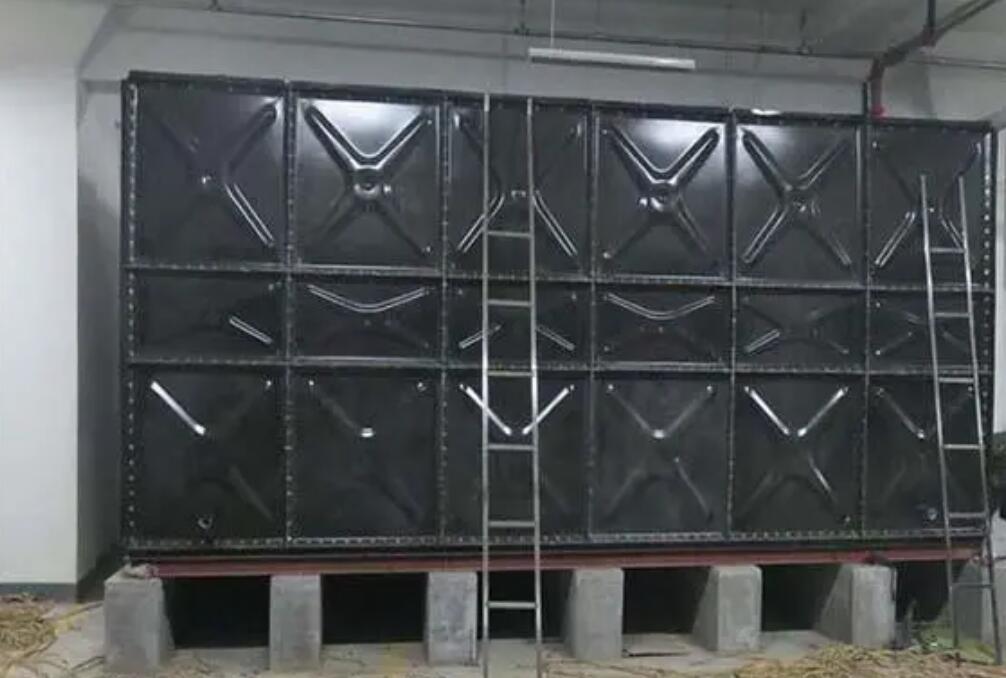
Fiber Reinforced Plastic (FRP) water tanks are widely used in civil water supply, fire water storage, and industrial circulating water systems due to their advantages of light weight, high strength, corrosion resistance, and ease of molding. One of the core concerns for users is their service life. A well-designed and compliantly manufactured FRP tank can have a theoretical design life exceeding 30 years. However, its actual lifespan is often influenced by a complex interplay of multiple factors. This article systematically analyzes the key variables determining the service life of FRP water tanks and provides practical maintenance recommendations.
1. Core Materials and Manufacturing Process: The Foundation of Service Life
The longevity of an FRP tank is fundamentally rooted in its constituent materials and manufacturing techniques, which directly determine the physical strength and chemical stability of the tank body.
1.1 Selection of Resin Matrix and Reinforcement Materials
The resin acts as the "flesh" of the FRP, defining its corrosion resistance. Food-grade unsaturated polyester resins (such as isophthalic or vinyl ester resins) are preferred for high-quality tanks, offering excellent long-term stability in water and strong resistance to hydrolysis. The use of lower-grade resins like orthophthalic types can lead to hydrolysis aging during long-term immersion, resulting in strength degradation and leaching of contaminants. The glass fiber reinforcement is the "skeleton." Its content, lay-up pattern, and interfacial bond strength with the resin are critical. For instance, Beijing Yuanhui FRP Co., Ltd. employs alkali-free glass fiber mats and computerized filament winding processes in its premium tank lines, ensuring uniform fiber distribution and precise resin content for optimal strength-toughness balance.
1.2 Process Quality and Structural Layer Design
A mature manufacturing process guarantees quality. Hand lay-up is prone to defects like air bubbles and delamination, whereas computer-controlled filament winding ensures uniform thickness and dense structure. A professional structural design typically includes a corrosion-resistant inner liner layer, a load-bearing structural layer, and an external protective layer. The liner layer must be resin-rich to form a smooth, impermeable barrier. The structural layer provides primary mechanical strength. The external layer requires UV absorbers to resist photo-degradation. Process flaws are a primary cause of后期 leakage and localized failure.
2. Installation Environment and Operating Conditions: The Ongoing Impact of External Factors
Even a high-quality tank's lifespan is significantly constrained by its environment and usage patterns.
2.1 Environmental Corrosion and Physical Impact
The installation environment is the dominant external factor. Prolonged exposure to atmospheres with strong acids, alkalis, or high salinity can chemically attack the tank's exterior. UV radiation causes polymer chain scission in the resin, leading to surface chalking, discoloration, and strength loss. Physically, an uneven tank foundation creates uneven stress distribution at the bottom, potentially initiating micro-cracks over time. Extreme thermal cycling from large day-night temperature swings also induces fatigue stress.
2.2 Medium Characteristics and Operational Load
The temperature, pH, and chloride ion content of the stored medium directly affect the liner's durability. Long-term storage of hot water above 50°C accelerates resin aging. High chloride content (e.g., in coastal groundwater) can exacerbate渗透 corrosion for certain resins. Operationally, frequent cycles between full and empty states create periodic pressure changes, testing the fatigue resistance of structural joints. Unreasonable external loads, such as unauthorized placement of heavy objects or equipment on the tank roof, can cause direct structural deformation.
3. Scientific Maintenance and Management: The Key to Proactively Extending Service Life
Viewing FRP tanks as "maintenance-free" is a misconception. Proactive, scientific maintenance is essential to unlocking their full lifespan potential.
3.1 Establishing a Regular Inspection and Monitoring Regime
Routine inspections are recommended every six months. Key checks include: visual inspection of the exterior for cracks, scratches, or exposed fibers; internal inspection (via manways) for smoothness, abnormal discoloration, blisters, or deposits; integrity of connections, stiffeners, and ladders; and proper function of accessories like level gauges and float valves. For large, critical tanks, a comprehensive professional assessment every 3-5 years—such as the post-sale inspection services offered by Beijing Yuanhui FRP Co., Ltd.—is advisable. This may include ultrasonic wall thickness measurement and Barcol hardness testing to quantitatively assess aging.
3.2 Implementing Effective Cleaning and Repair
Regular cleaning is vital to prevent long-term erosion from microbial biofilms and deposits, and to avoid water quality contamination. Use soft tools and neutral cleaners; metal brushes or strong acids/alkalis must be avoided as they damage the liner. Minor cracks or damage identified during inspections should be promptly repaired using resin and glass fiber cloth compatible with the original material to prevent defect propagation. Recoating the exterior with a UV-resistant topcoat is a cost-effective life-extension measure for tanks with severely chalked surfaces.
Conclusion
The service life of an FRP water tank is not a fixed number but a dynamic outcome determined by the combined effects of material/process quality, environmental/operational loads, and maintenance standards. To achieve reliable service for decades, users must select reliable suppliers like Beijing Yuanhui FRP Co., Ltd., who employ quality materials and standardized processes. Installation must adhere to environmental and foundational specifications. Most importantly, a "prevention-first" philosophy of proactive maintenance must be implemented throughout the tank's service life. Through this holistic, lifecycle management approach, the superior performance and longevity inherent in FRP water tanks can be fully realized, ensuring water security and maximizing return on investment.