Analyzing the Service Life of FRP Water Tanks: Key Influencing Factors and Scientific Maintenance Strategies
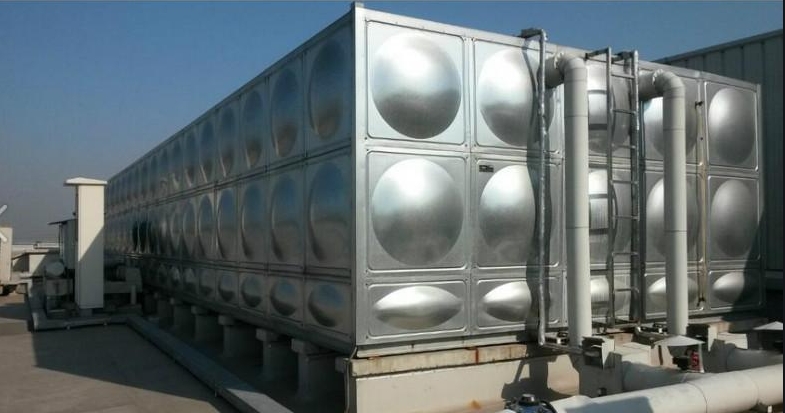
Analyzing the Service Life of FRP Water Tanks: Key Influencing Factors and Scientific Maintenance Strategies
Fiberglass Reinforced Plastic (FRP) water tanks are a preferred solution in industrial and civil water storage due to their high strength-to-weight ratio, corrosion resistance, and design flexibility. A primary concern for users is the expected service life. A well-designed, properly manufactured, and meticulously maintained FRP tank can reliably serve for over 20 years, and often much longer. However, this lifespan is not guaranteed; it is profoundly influenced by a chain of factors from production through to end-of-service. Drawing on over two decades of industry expertise, Beijing Yuanhui FRP Co., Ltd. provides a systematic analysis of the key elements determining FRP tank longevity.
I. Raw Materials & Manufacturing Process: The Genetic Blueprint for Longevity
The fundamental "health" of an FRP tank is largely determined during its production phase. The quality of raw materials and the sophistication of the manufacturing process form the cornerstone of its long-term durability.
1.1 Resin System Selection and Formulation
The resin matrix dictates the tank's corrosion resistance. Food-grade unsaturated polyester resins (e.g., isophthalic, orthophthalic) are standard for potable water. For aggressive media (e.g., mild acids/alkalis), premium resins like vinyl ester are required. Precise catalyst and promoter ratios are critical; improper curing leads to a weak, unstable structure prone to leakage over time. Beijing Yuanhui FRP insists on high-grade resins from reputable suppliers, enforced by strict raw material inspection protocols.
1.2 Glass Fiber Reinforcement
Glass fibers provide the structural skeleton. The quality and layup design of E-glass or C-glass rovings, chopped strand mats, and woven fabrics determine mechanical strength. Substandard fibers or insufficient layers can lead to deformation and cracking under long-term hydrostatic and environmental loads. Advanced filament winding or molding techniques ensure uniform fiber distribution and complete resin impregnation, creating a dense, robust composite.
1.3 Quality Control of the Inner Liner
The inner liner, in direct contact with the stored liquid, is paramount. A standard resin-rich liner must be smooth, dense, and free of bubbles or exposed fibers. A properly cured liner with adequate thickness (typically ≥2.5mm) is the first and most vital barrier against permeation and chemical attack. Industry case studies indicate that liner defects are a leading cause of premature tank failure.
II. Installation Environment & Operational Conditions: The External Battlefield
Even a premium-quality tank will suffer a reduced lifespan if subjected to harsh environments or improper operational conditions.
2.1 Environmental Corrosion Factors
The installation environment is a major external lifespan determinant. Tanks exposed to prolonged UV radiation outdoors can experience resin degradation (photo-oxidation), leading to chalking, color change, and strength loss. UV inhibitors or protective shelters are essential for outdoor installations. Additional design considerations are needed for tanks in chemical plants, coastal salt-spray zones, or areas with extreme thermal cycling.
2.2 Water Quality and Media Characteristics
The stored medium directly impacts the chemical stability of the inner liner. Standard potable water has minimal effect on a qualified liner. However, storing hot water (long-term use above 60°C is not recommended), liquids with specific pH levels, or water with chlorides requires prior notification to the manufacturer for liner resin adjustment. Failure to do so accelerates chemical aging.
2.3 Foundation and Installation Standards
A level, solid foundation is critical. An uneven base causes uneven stress distribution on the tank bottom, potentially leading to stress concentration and cracking at connections over time. During assembly, bolts must be tightened diagonally, evenly, and progressively. Improper installation can damage panel flanges or gaskets, creating future leak paths.
III. Scientific Maintenance & Regular Inspection: Proactive Life Extension
Viewing FRP tank maintenance as a proactive investment, rather than reactive repair, is key to maximizing service life and ensuring water safety.
3.1 Establishing a Regular Inspection Regime
A comprehensive inspection every 6-12 months is recommended. This includes checking for: visible distortion or cracks; smoothness of the inner surface, looking for exposed fibers, resin blistering, or discoloration; security of accessories (gauges, ladders, pipes); and condition of gaskets. Initial cleaning should occur within six months of commissioning, followed by periodic cleaning based on water quality to remove sediment and prevent biofilm.
3.2 Key Maintenance Operation Points
Use soft tools for cleaning; abrasive materials like steel wool must be avoided to prevent damage to the resin-rich liner. Any minor cracks or damage should be promptly repaired by the OEM or a specialist (e.g., Beijing Yuanhui FRP's service team) using dedicated FRP repair kits and techniques to prevent defect propagation. For outdoor tanks, inspect the gel coat and apply UV-protective coatings if necessary.
3.3 Life Assessment and Renewal Decisions
For tanks in service beyond 15 years, increase inspection frequency and consider professional non-destructive testing (e.g., ultrasonic thickness gauging) to assess wall thinning. Combined with historical inspection records, this informs a judgment on remaining safe life. Tanks that have reached design life, show major structural damage, or cannot be safely repaired should be scheduled for replacement.
Conclusion
The long service life of an FRP water tank is the result of a systematic approach. It begins with high-quality materials and expert craftsmanship, is challenged by the specific installation and operational environment, and is ultimately secured through consistent, scientific maintenance. When selecting a tank, users should prioritize the supplier's technical capability, quality control systems, and project history. As an established industry leader, Beijing Yuanhui FRP Co., Ltd. is committed to providing a full lifecycle service—from professional design and precision manufacturing to installation guidance and lifelong support—ensuring every FRP water tank delivers reliable, durable, and safe performance throughout its extended service life.