Comprehensive Analysis of FRP Water Tank Production Process: Precision Manufacturing from Raw Materials to Finished Product
Comprehensive Analysis of FRP Water Tank Production Process: Precision Manufacturing from Raw Materials to Finished Product
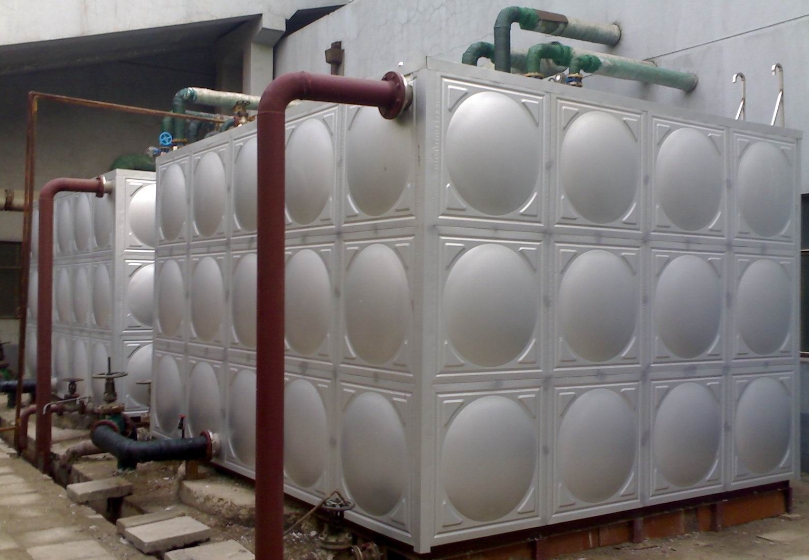
Fiber Reinforced Plastic (FRP) water tanks have become a preferred solution for water storage in civil, commercial, and industrial applications, owing to their superior corrosion resistance, high strength-to-weight ratio, and long service life. The foundation of this performance lies in a rigorous, precise, and standardized production process. This article systematically deconstructs the entire journey of an FRP tank from design to dispatch, using the mature manufacturing protocols of Beijing Yuanhui FRP Co., Ltd. as a benchmark to reveal the engineering logic behind high-quality tank production.
I. Production Preparation and Mold Engineering
An exceptional product begins with an exceptional mold. FRP tank production is fundamentally centered on the mold, which is the core tooling determining the tank's geometry, surface finish, and forming efficiency.
1.1 Mold Design and Fabrication
Molds are typically constructed from high-quality wood, metal, or high-gloss FRP. Beijing Yuanhui utilizes CNC machining centers to create master models, ensuring dimensional tolerances are controlled within ±0.5mm. The mold surface undergoes a minimum of six stages of sanding, polishing, and sealing, followed by the application of high-performance release agents (such as PVA or semi-permanent waxes) to guarantee easy demolding and achieve a Class-A surface finish on the product.
1.2 Raw Material Inspection and Cutting
Key raw materials include E-glass fiber rovings, chopped strand mat (CSM), woven roving, and unsaturated polyester resin. Food-grade certification of the resin (e.g., compliance with GB/T 17219 or equivalent standards) is mandatory for potable water tanks. Beijing Yuanhui's QC department tests each resin batch for viscosity, acid value, and solid content. The sizing on glass fibers and moisture content must also meet specifications. Based on the designed panel thickness (typically 6mm-12mm), reinforcement materials are pre-cut into specific shapes and sizes using CNC cutting machines, keeping material waste below 3%.
II. Core Forming Processes: Hand Lay-up and Filament Winding
Panel formation for FRP tanks primarily employs the hand lay-up process, while cylindrical tanks or specific structural components may utilize filament winding.
2.1 Hand Lay-up Process in Detail
Operators sequentially apply layers in a "resin-reinforcement-resin" order onto the clean mold surface. For a standard 10mm thick panel, a typical laminate structure includes: 1 layer of surface veil (0.3mm), 2 layers of CSM (total 1.2mm), and 4 layers of woven roving (alternately laid, total ~8.5mm). Each layer must be thoroughly rolled with specialized rollers to remove air bubbles and ensure complete fiber wet-out. The resin-to-catalyst ratio must be precise, with an error margin within 0.5%. Ambient temperature is typically controlled between 18-25°C and humidity below 80% to maintain an optimal gel time (usually 30-45 minutes).
2.2 Application of Filament Winding
For large cylindrical tanks or reinforcing rings, filament winding offers higher axial strength and automation potential. Beijing Yuanhui's winding equipment allows for precise hoop and helical wind patterns with constant fiber tension, resulting in products that excel in burst pressure tests at 1.5 times the design pressure.
III. Curing, Demolding, and Post-Processing
The formed part must undergo a complete curing cycle to achieve its final mechanical properties.
3.1 Staged Curing and Post-Curing
After gelation, the part undergoes initial curing in the mold for no less than 8 hours. Following demolding, it is transferred to a temperature-controlled area for post-curing. This is a critical chemical process; Beijing Yuanhui's specification requires post-curing at 40-60°C for over 24 hours to achieve a resin cross-linking degree above 90% and a Barcol hardness of no less than 40. Data indicates that sufficient post-curing can improve the long-term fatigue resistance of the tank by more than 30%.
3.2 Machining and Assembly Preparation
Fully cured and inspected panels move to machining centers. Diamond-tipped tools or water jets are used to accurately cut manways, inlet/outlet ports, overflow openings, and flange connections. Cut-out dimensional errors are strictly controlled within ±1mm, and flange face flatness is verified with levels. All panel edges are beveled in preparation for the subsequent stage of on-site assembly or factory modular assembly.
IV. Quality Inspection and Performance Verification
Every FRP water tank leaving the factory must pass a stringent quality control system.
4.1 Non-Destructive Testing and Physical Property Evaluation
Beijing Yuanhui employs visual inspection, tap testing (to detect delamination), and Barcol hardness testing for routine checks. For each production batch or every 500 cubic meters of tank volume, sample coupons made with identical lay-up are sent to the lab for flexural strength, tensile strength, and resin content testing. According to standard JC/T 658.2, the flexural strength of a high-quality tank panel should not be less than 150MPa.
4.2 Water-Fill Test and Hygienic Certification
For modular tanks assembled in the factory, or individual panels of large tanks, a simulated water-fill test is conducted. Pressure is applied to the panel equivalent to the hydrostatic pressure of a full tank, held for 24 hours to check for leakage or abnormal deformation. Ultimately, the finished tank must obtain a hygienic performance test report from an authorized body, proving that its leachate complies with national drinking water standards. This is the final checkpoint determining the tank's suitability for potable water storage.
Conclusion
The production of FRP water tanks is far from a simple act of "brushing resin and laying glass cloth." It is a precision system engineering endeavor that integrates materials science, chemical engineering, and mechanical manufacturing. From the sub-millimeter accuracy of the mold, the scientific design of the laminate, the precise control of curing, to the final rigorous performance verification, meticulous control at each stage collectively forges a tank capable of reliable service for over 30 years. Professional manufacturers like Beijing Yuanhui FRP Co., Ltd., by deeply integrating standardized processes with detailed management, not only ensure the quality of every FRP tank but also drive the continuous evolution of the entire industry towards higher performance, greater environmental friendliness, and smarter manufacturing. Choosing a professional manufacturer with transparent processes is the fundamental guarantee for acquiring a superior FRP water tank product.