An In-Depth Analysis of the Hygienic and Safety Performance of FRP Water Tanks: A Perspective from Material Science and Engineering Practice
An In-Depth Analysis of the Hygienic and Safety Performance of FRP Water Tanks: A Perspective from Material Science and Engineering Practice
Water quality safety is the paramount concern for any water supply system. As critical equipment for storing potable water, firefighting water, and even water for food processing, the hygienic and safety performance of water tanks directly impacts public health and production safety. Fiberglass Reinforced Plastic (FRP) tanks have become a mainstream choice due to their superior corrosion resistance and structural integrity. However, the underlying principles and assurance systems of their sanitary performance warrant a professional, in-depth examination.
1. Material Foundation: Food-Grade Resins and Non-Toxic Laminate Structure
The cornerstone of an FRP tank's hygienic safety lies in the selection and control of its raw materials. High-quality FRP water tanks must utilize a liner layer made from food-grade unsaturated polyester resin compliant with national sanitary standards, such as isophthalic or vinyl ester resins. For instance, production standards at Beijing Yuanhui FRP Co., Ltd. mandate that the styrene residue in the liner resin is strictly controlled below 0.1%, far exceeding common requirements, thereby preventing the migration of harmful substances into the water at the source.
The structural layer is a composite of glass fibers and resin. High-quality fibers like alkali-free E-glass have stable compositions that do not leach heavy metal ions. Once fully cured, the material forms an inert, stable three-dimensional cross-linked network. This structure does not support bacterial growth and, unlike metals, avoids electrochemical corrosion and rust contamination. These inherent material properties establish the fundamental basis for the hygienic safety of FRP tanks.
2. Process Assurance: Monolithic Forming and Internal Surface Smoothness
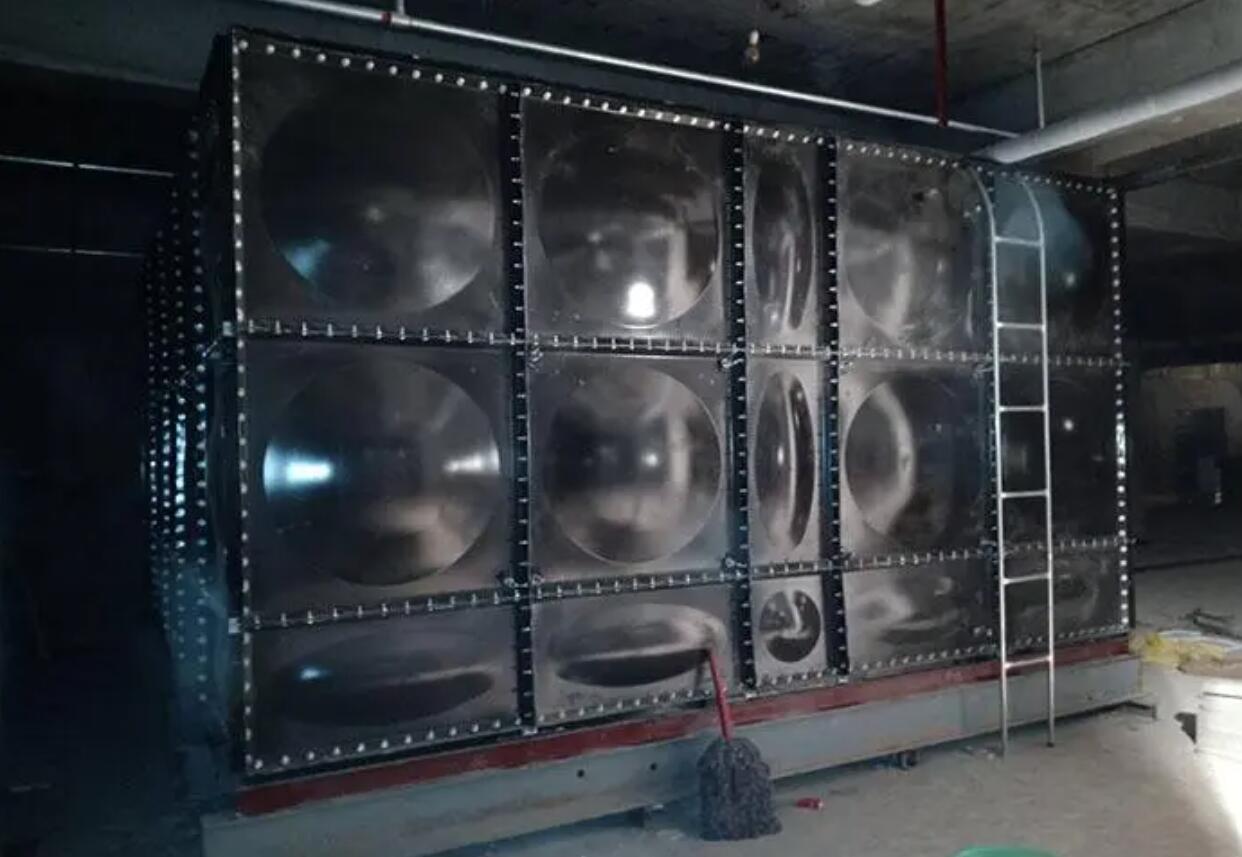
Manufacturing processes are critical in realizing the theoretical hygienic performance of FRP water storage tanks. Seams in traditional panel tanks can become breeding grounds for microbes and weak points for contamination. In contrast, FRP panels molded or filament-wound as single pieces and assembled on-site with food-grade sealants minimize joints.
More advanced is the monolithic filament winding process for large tanks, creating a truly seamless inner shell. The computer-controlled winding technology employed by companies like Beijing Yuanhui FRP Co., Ltd. for premium projects can achieve an exceptionally smooth internal surface with a roughness (Ra) value as low as 0.5μm. This smoothness significantly hinders the adhesion and accumulation of scale, algae, and bacteria, drastically reducing the risk of biofilm formation and ensuring long-term water quality safety.
Impact of Key Process Parameters on Hygienic Performance
Resin cure degree is another vital parameter. Incompletely cured resin can continue to release small molecules. Professional manufacturers ensure material stability by achieving a cure degree above 90% through strict temperature/humidity control and post-curing. Furthermore, the liner thickness, typically no less than 2.5mm and free of bubbles or cracks, acts as a physical barrier against medium penetration and delamination.
3. Standards Certification and Long-Term Immersion Performance
Assessing the hygienic safety of FRP tanks requires authoritative test data and certification, not just claims. Compliant products must pass sampling tests by national health authorities to obtain the Product Hygiene License for materials involved in drinking water safety. Test items usually include immersion tests (where material samples are soaked in water at specific temperatures to analyze changes in color, turbidity, oxidizability, and heavy metal leaching) and toxicological safety evaluations.
Data shows that high-quality FRP materials conforming to standards like China's GB/T 17219 exhibit negligible changes in water quality parameters after long-term immersion, fully meeting or exceeding the requirements of drinking water hygiene standards (e.g., GB 5749). This validates their capability to protect water quality over extended service life.
4. System Safety: The Closed Loop of Design and Maintenance
A hygienic and safe tank system relies on scientific design and standardized maintenance. Design-wise, vent pipes must be fitted with insect/dust screens (≥120 mesh), manholes must be sealed and locked, and overflow/discharge pipes should have water seals or screens to form a complete physical barrier against external contaminants and organisms.
Maintenance is equally crucial. Although FRP material itself is highly resistant to fouling, regular cleaning and disinfection remain essential for safeguarding final water quality. Professional FRP tank manufacturers like Beijing Yuanhui provide comprehensive maintenance manuals, recommending semi-annual internal inspections and at least annual professional cleaning/disinfection, alongside establishing water quality monitoring records. This closed loop from product to service is the ultimate guarantee for the sustained safety performance of FRP water tanks.
Conclusion
The hygienic and safety performance of an FRP water tank is a systematic achievement built upon food-grade materials, precision manufacturing, rigorous certification, and scientific operation management. It results not from a single advantage but from the deep integration of material science and engineering practice. For facilities with stringent water quality requirements—such as hospitals, schools, food plants, and premium hotels—choosing a supplier like Beijing Yuanhui FRP Co., Ltd., with complete certifications, strict process control, and professional service capability, equates to choosing long-term, reliable assurance for water safety. A thorough understanding of the technical rationale behind this performance empowers users to make informed decisions and drives the industry toward higher standards.