Seismic Performance Analysis and Key Design Specifications for FRP Water Tanks
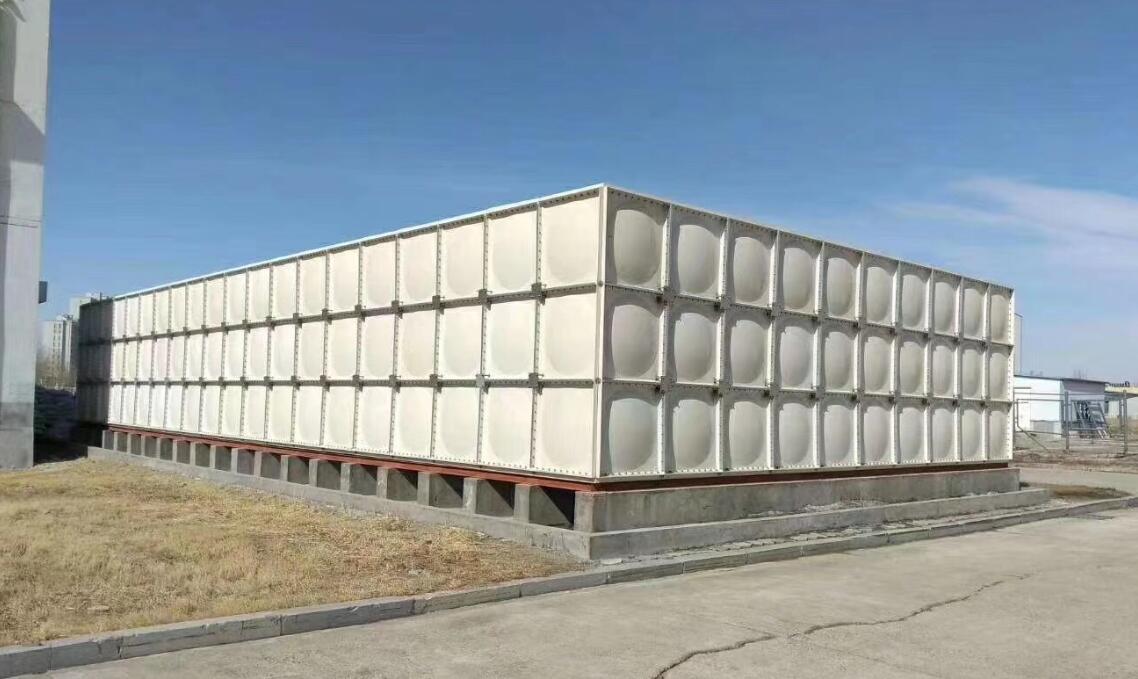
Seismic Performance Analysis and Key Design Specifications for FRP Water Tanks
Earthquake damage to water supply systems directly impacts post-disaster rescue and recovery. As the core water storage unit, the seismic performance of Fiber Reinforced Plastic (FRP) water tanks is critical. Their unique material properties and structural design confer significant advantages under seismic loads.
Seismic Performance Mechanism of FRP Materials
The seismic resilience of FRP tanks stems from their composite nature. The matrix resin (typically unsaturated polyester or epoxy) combined with glass fiber reinforcement creates a lightweight structure with high specific strength and specific modulus.
Seismic Advantages from Material Properties
Firstly, FRP exhibits excellent elastic deformation capability. Its tensile strength can reach 300-500 MPa, significantly higher than mild steel, while its density is only about one-quarter that of steel. Under seismic waves, this high-strength, lightweight characteristic allows the tank shell to undergo elastic deformation to absorb and dissipate energy, rather than failing in a brittle manner. Secondly, FRP has high fatigue strength, enabling it to withstand the repeated alternating stresses induced by earthquakes. For instance, in shake table tests, FRP laminates conforming to ASTM D4021 showed less than 15% performance degradation after millions of load cycles.
Synergistic Effect of Structural Design
Beyond the material itself, the tank's structural design is another pillar of seismic performance. The modular bolted assembly, integrated by an internal tie-rod system (typically stainless steel or FRP), forms a holistic "box structure." This design allows seismic forces to be effectively transferred and redistributed through the tie-rod network, preventing stress concentration. In its designs, Beijing Yuanhui FRP Co., Ltd. precisely calculates the diameter, spacing, and pre-tension of tie-rods based on tank capacity and seismic fortification intensity to ensure integral协同 work.
Analysis of Domestic and International Seismic Design Codes and Standards
The design of FRP water tanks must strictly adhere to relevant codes, which form the legal and technical baseline for safety and reliability.
Chinese Standard System
Domestic design primarily follows the Code for Seismic Design of Buildings (GB 50011) and the Code for Structural Design of Water Supply and Wastewater Engineering Structures (GB 50069). These codes mandate seismic action calculations for water storage structures in regions with a fortification intensity of 7 degrees or higher. Design must consider the horizontal seismic influence coefficient and calculate the hydrodynamic pressure (convective and impulsive components) generated by the stored water. For example, the base shear for a 100 m³ vertical cylindrical tank in an intensity 8 zone can increase by over 60% compared to static conditions. Furthermore, the industry standard FRP Water Tanks (JC/T 658.1) specifies key indicators like panel thickness, oxygen index, Barcol hardness, and connector strength, all indirectly related to seismic durability.
International Reference Standards
Globally, the American AWWA D120 standard for bolted FRP tanks is widely recognized. It details seismic design load combinations, allowable stresses, and connection details. Japan, given its seismic activity, has developed a refined design methodology for liquid storage containers, emphasizing control of liquid sloshing (sloshing forces), often mitigated by internal baffles. These standards provide crucial references for high-end domestic projects or export product design.
Key Technical Measures to Enhance Seismic Resistance of FRP Tanks
Enhancing seismic performance requires integrated efforts across design, manufacturing, and installation, based on code requirements and engineering practice.
Refined Design and Calculation
Seismic design begins with precise load analysis. Engineers must calculate multiple load combinations including dead load, water weight, snow load, wind load, and seismic action based on site-specific geotechnical reports and fortification intensity. Using Finite Element Analysis (FEA) software to simulate stress on the entire tank and connection points has become standard practice for industry leaders. The technical team at Beijing Yuanhui FRP Co., Ltd. simulates tank response under seismic waves (e.g., EL-Centro wave) for specific projects to optimize tie-rod layout and panel stiffener design.
Manufacturing and Material Process Control
The mechanical properties of the panels are fundamental. Using alkali-free glass fibers, high-toughness resins, and employing computer-controlled filament winding or molding processes to align fibers with principal stress directions significantly improves panel crack resistance. Local reinforcement at critical connection points, such as panel holes and tie-rod joints, is essential to prevent stress tearing.
Seismic Detailing for Foundation and Installation
The seismic principle of "strong foundation, weak superstructure" applies. The tank foundation must be level, solid, and possess sufficient integrity and resistance to differential settlement. In high seismic zones, using reinforced concrete grade beams to encase the tank bottom and installing restraint devices is recommended. During installation, all connecting bolts must be tightened uniformly in a diagonal sequence to the specified torque to ensure even stress transfer. A post-installation hydrostatic test serves not only for leak detection but also as a pre-load test for structural integrity.
Conclusion
The superior seismic performance of FRP water tanks results from the integration of materials science, structural mechanics, and code compliance. Their inherent advantages of being lightweight, high-strength, and elastic provide a natural resilience. However, strict adherence to design codes like GB 50011, coupled with the implementation of refined calculations, process controls, and seismic detailing, constitutes the essential acquired safeguard for reliability during earthquakes. As seismic theory advances and material processes evolve, FRP water tanks will undoubtedly play an even more robust role in safeguarding lifeline infrastructure. Industry practitioners, from designers to manufacturers like Beijing Yuanhui FRP Co., Ltd., must prioritize seismic performance at the core of quality, committing to continuous research and practical refinement.