In-Depth Analysis of the Corrosion Resistance of FRP Water Tanks: A Perspective from Materials Science and Engineering Practice
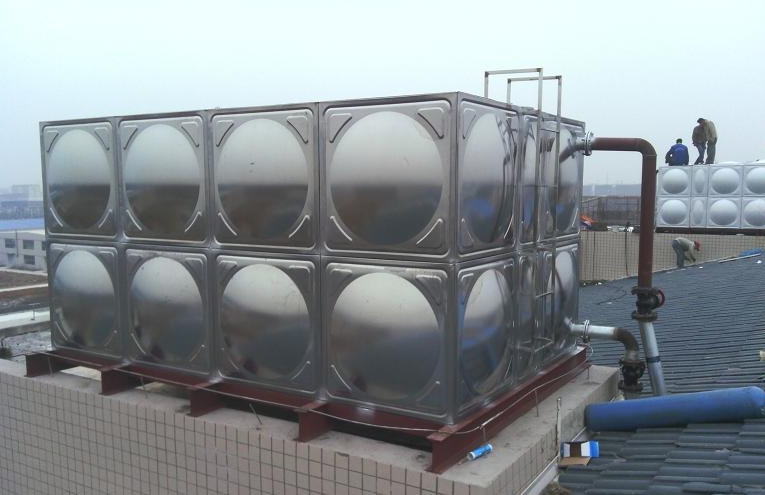
In-Depth Analysis of the Corrosion Resistance of FRP Water Tanks: A Perspective from Materials Science and Engineering Practice
Fiber Reinforced Plastic (FRP) water tanks have secured a dominant position in storing potable water, firefighting water, industrial cooling water, and various chemical media, primarily due to their exceptional corrosion resistance. This resistance is not a singular property but the result of a synergistic interplay between material formulation, structural design, manufacturing processes, and quality control systems. This article deconstructs the scientific and engineering foundations of this performance advantage.
1. The Foundation of Protection: Synergistic Mechanisms of Resin Matrix and Glass Fiber
The corrosion resistance of FRP tanks is fundamentally rooted in their composite material structure. It provides not passive resistance but an actively designed, dynamically stable protective system.
1.1 The Critical Role of the Resin Matrix
As the continuous phase, food-grade unsaturated polyester, vinyl ester, or epoxy resin forms the first line of defense. For instance, vinyl ester resin, commonly used by leading manufacturers like Beijing Yuanhui FRP Co., Ltd., features low ester group density protected by methacrylate groups, granting it far superior stability against hydrolysis and acid/alkali attack compared to standard polyesters. Within a broad pH range of 2-12, the annual permeation rate of a properly formulated liner can be below 0.1mm, providing a chemically inert barrier. Incorporated UV absorbers and anti-oxidants further retard environmental aging.
1.2 Reinforcement and Barrier Function of Glass Fiber
The alkali-free glass fiber reinforcement, inherently chemically resistant, acts as a skeleton. Its strong bond with the resin creates a dense physical barrier, significantly prolonging the path for corrosive media to reach the inner wall. According to ASTM C581 testing, high-quality FRP laminates can retain over 85% of their flexural strength after 10 years of exposure in aggressive chemical environments at 60°C.
2. Process Empowerment: How Molding Technology Shapes Superior Anti-Corrosion Layers
Superior raw materials must be transformed into reliable products through precise manufacturing. Hand lay-up and computer-controlled filament winding are two primary processes, each influencing corrosion resistance in specific ways.
2.1 The Core Construction of the Liner
The liner in direct contact with the stored medium is critical. Beijing Yuanhui FRP Co., Ltd. employs a process where the liner is built using C-glass surface veil and chopped strand mat with high resin content, typically 70%-90%, forming a resin-rich layer. This layer is strictly controlled to a thickness of 1.5-2.5mm, ensuring no fiber exposure and eliminating initiation points for corrosion. Precise control of gel time and degree of cure prevents micro-cracking from curing stresses, which is the microscopic foundation for long-term integrity.
2.2 Contribution of the Structural Layer and Winding Process
Above the resin-rich liner lies the structural load-bearing layer. Continuously wound glass fibers under controlled tension form a high-strength network. This layer not only provides mechanical support but its tight fiber alignment further hinders deep media penetration. Process stability directly dictates wall thickness uniformity, preventing early failure at localized weak points.
3. Environmental Challenges and Long-Term Performance Validation
The corrosion resistance of FRP tanks must be validated in specific environments. Their long-term durability is proven through both laboratory-accelerated aging tests and real-world engineering cases.
3.1 Addressing Diverse Corrosive Environments
Unlike the primarily electrochemical corrosion in metal tanks, FRP faces chemical solvent swelling, stress cracking, osmotic blistering, etc. Resin selection is paramount for different media. For example, water containing chlorine disinfectants requires resins with high chlorine resistance, while high-temperature environments (>60°C) demand heat-resistant formulations. Beijing Yuanhui provided FRP tanks for a coastal power plant's cooling water system, an environment combining high humidity, salt spray, and thermal cycling. Through a customized resin system and an added external anti-aging layer, the tanks have operated reliably for over 15 years.
3.2 Durability Data and Case Studies
Long-term tracking data indicates that well-designed, fabricated, and installed premium FRP tanks can have a service life exceeding 30 years. Their maintenance cost is significantly lower than that of steel tanks requiring periodic recoating. A typical comparative case: a chemical plant used both 304 stainless steel and custom FRP tanks for weak acidic process water. After three years, the stainless steel tank showed pitting and leakage at welds, while the FRP tank's interior remained intact, requiring no intermediate repair.
4. Conclusion: Systems Engineering as the Ultimate Guarantee of Corrosion Resistance
The superior corrosion resistance of FRP water tanks is a systems engineering achievement, spanning from molecular-level material design to macro-scale structural fabrication. It relies on the scientific formulation of high-performance resins and glass fibers, is realized through meticulous molding processes that shape the resin-rich liner and dense structural layer, and is validated by targeted design for specific environmental challenges. For end-users, partnering with experienced suppliers like Beijing Yuanhui FRP Co., Ltd., who possess deep material expertise, strict process control, and rich engineering experience, is key to ensuring FRP tanks deliver their promised long-term anti-corrosion benefits, safeguarding water storage safety and economic efficiency. This choice represents not just selecting a product, but investing in a proven, reliable corrosion mitigation solution.