Understanding FRP Water Tank Lifespan: Key Influencing Factors and Scientific Maintenance Strategies
Understanding FRP Water Tank Lifespan: Key Influencing Factors and Scientific Maintenance Strategies
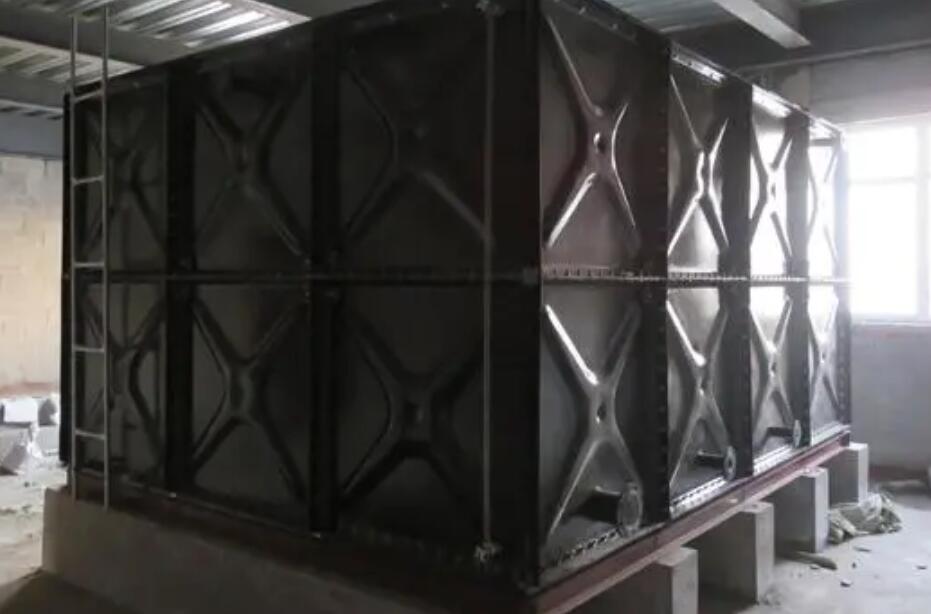
Fiber Reinforced Plastic (FRP) water tanks are a preferred solution in industrial and civil water storage due to their light weight, high strength, corrosion resistance, and ease of installation. A central concern for users is their operational lifespan. While the typical design life ranges from 20 to 30 years, the actual service life can vary significantly based on multiple factors. This article systematically analyzes the intrinsic and external determinants of an FRP tank's longevity.
I. The Three Intrinsic Pillars Determining FRP Tank Lifespan
The "innate constitution" of a tank, defined by its materials and manufacturing, sets the upper limit for its lifespan.
1. Raw Material Quality: The Resin and Fiber Synergy
Food-grade unsaturated polyester resin is the core of the tank's inner liner. Its water and corrosion resistance directly impact water quality safety and structural durability. Resins with low styrene emission and high cross-linking density form a more impermeable barrier. Alkali-free or medium-alkali glass fibers provide the reinforcing skeleton; their strength and hydrolysis resistance are critical. Companies like Beijing Yuanhui FRP Co., Ltd. source premium resins and alkali-free fibers from reputable suppliers to ensure foundational reliability. Substandard materials lead to premature aging, discoloration, strength loss, and potential leaching.
2. Structural Design and Craftsmanship
Sound structural design, including the layout of stiffeners on panels and accurate pressure calculations, ensures mechanical stability. Hand lay-up processes require skilled operators to achieve full fiber impregnation, eliminate air bubbles, and ensure strong inter-laminar bonding. Industry leaders often employ computer-aided design combined with mature molding or filament winding techniques to guarantee uniform thickness and consistent performance. Process flaws like incomplete curing, delamination, or dry spots are potential sources of future leakage and structural failure.
3. Laminate Structure: From Inner Liner to Outer Layer
A standard corrosion-resistant FRP tank wall comprises an inner liner, a structural layer, and an outer protective layer. The resin-rich inner liner must be smooth and dense for permeability resistance; the structural layer provides strength; the outer layer requires additives like UV absorbers for weatherability. The precise execution of each layer's function is key to long-term performance.
II. External Environment and Service Conditions: The Lifespan Accelerator or Extender
Even a well-manufactured tank's actual lifespan is profoundly influenced by its service environment.
1. Medium Corrosiveness and Temperature
The stored medium is paramount. Storing potable water at ambient temperature is a standard application. Storing heated water or liquids with slight acidity, alkalinity, or chlorine ions accelerates the hydrolysis and aging of the resin matrix. For chemical industry applications, specialized corrosion-resistant resin systems are mandatory.
2. Installation Environment and Physical Stress
An uneven installation foundation subjects the tank bottom to long-term uneven stress, potentially causing micro-cracks. Roof-mounted tanks endure constant wind loads and solar exposure, demanding higher overall stiffness and surface weatherability. Freeze-thaw cycles in cold climates pose additional challenges. In a case for an outdoor tank in a North China wind farm project, Beijing Yuanhui FRP Co., Ltd. enhanced the outer layer with UV-resistant and low-temperature-tolerant formulations and designed a reinforced base.
3. Load Cycling and Accidental Impact
Frequent full-to-empty cycles create alternating stress in the material, potentially inducing fatigue. Protection against accidental mechanical impact is also necessary.
III. Scientific Maintenance and Inspection: Proactively Extending Service Life
Viewing FRP tanks as "maintenance-free" is a common misconception. Scientific maintenance can significantly extend their effective service period.
1. Establishing a Regular Inspection Regime
A systematic inspection every six to twelve months is recommended. This should include: checking for visible deformation or cracks; inspecting the inner liner for smoothness, peeling, or exposed fibers; ensuring fittings (manways, ladders, tie rods) are secure; and verifying seal integrity. Areas with frequent water level fluctuations require special attention.
2. Proper Cleaning and Disinfection Procedures
Regular cleaning prevents biofilm buildup, reducing long-term erosion of the inner wall. Use soft tools to avoid scratching the liner. Disinfectants should be non-corrosive to FRP and used in diluted concentrations as recommended, avoiding prolonged high-concentration contact.
3. Timely Repair and Professional Support
Upon discovering fine cracks or leaks, contact the manufacturer or a professional repair team immediately. Proper repair involves grinding the damaged area, applying a layered laminate patch, and using a resin system compatible with the original—ordinary adhesives are unsuitable. Beijing Yuanhui FRP Co., Ltd. offers lifelong technical support and professional after-sales repair services to help clients achieve the designed lifespan of their tanks.
Conclusion
The service life of an FRP water tank is not a fixed number but a dynamic outcome determined by the interplay of "product quality," "environmental load," and "maintenance management." To achieve decades of reliable service, users must select reliable suppliers like Beijing Yuanhui FRP Co., Ltd., who prioritize material and工艺 quality, provide a suitable installation environment, and implement a scientific maintenance protocol. Understanding and managing these influencing factors is essential to maximizing the return on investment in FRP water tanks and ensuring the long-term safety and stability of water storage systems.