In-Depth Analysis of the Hygienic and Safety Performance of FRP Water Tanks: A Perspective from Materials Science and Engineering Practice
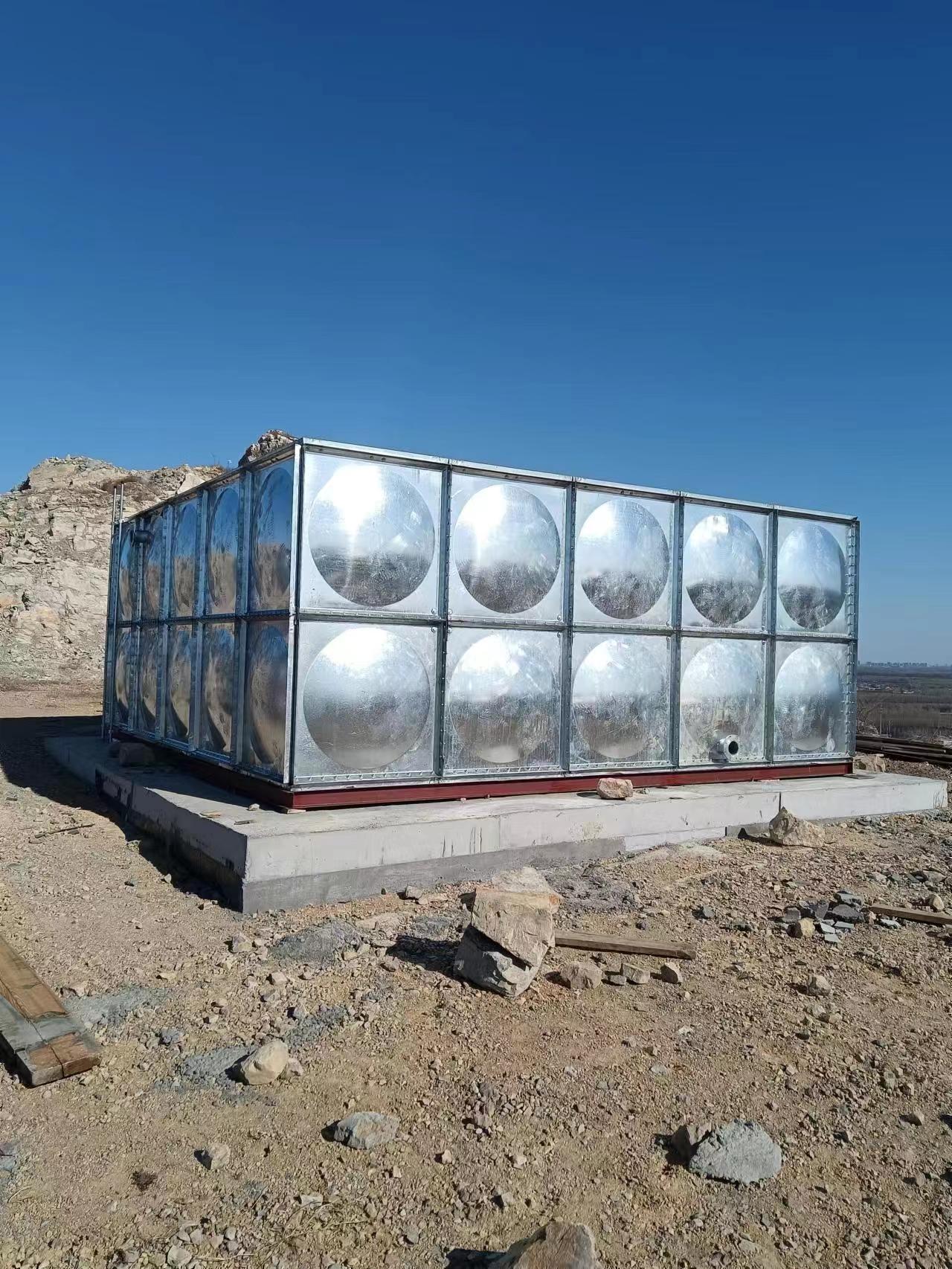
In-Depth Analysis of the Hygienic and Safety Performance of FRP Water Tanks: A Perspective from Materials Science and Engineering Practice
The hygienic safety of water storage equipment is a core issue concerning public health and water quality. Fiber Reinforced Plastic (FRP) water tanks, by virtue of their unique material properties and mature manufacturing processes, play a crucial role in modern water supply systems. Their hygienic and safety performance is not a single metric but the result of the combined effects of materials, craftsmanship, maintenance, and long-term stability.
1. Food-Grade Resin and Leak-Proof Structure: The Material Foundation of Hygiene and Safety
The hygienic safety of FRP tanks is fundamentally rooted in raw material selection. High-quality tanks typically use food-grade unsaturated polyester resin compliant with national standards (e.g., China's GB 9685) as the matrix material. Taking the production practice of Beijing Yuanhui FRP Co., Ltd. as an example, its core product lines employ isophthalic or vinyl ester food-grade resins. These resins exhibit stable molecular structure after curing, effectively preventing the leaching of harmful substances like styrene monomer, ensuring stored water is free from odor and contamination.
Structurally, the superior sealing of FRP tanks forms another line of defense. Panels formed by molding or filament winding processes are assembled on-site using food-grade sealing gaskets and bolts. This construction achieves overall leak-proof and seamless integrity, completely preventing the ingress of external contaminants (e.g., dust, insects) and the leakage or secondary contamination of stored water. Compared to traditional concrete tanks prone to cracking and leakage or metal tanks susceptible to corrosion and rust, the integrated sealing advantage of FRP tanks is significant.
Key Process: Gel Coat Technology for the Inner Liner
At the process level, professional FRP tank manufacturers apply a dense gel coat to the inner surface. This layer, typically 0.3-0.5mm thick, forms a smooth, mirror-like "barrier layer" upon curing. Its function is not only to improve surface smoothness but, more importantly, to significantly reduce the potential for microbial and algal adhesion and growth, facilitating routine cleaning and disinfection.
2. Microbial Control and Water Quality Assurance: The Core Challenge for Long-Term Stability
As static storage units, controlling microbial growth is central to ensuring water safety. The FRP material itself is inert; it does not produce nutrients like rust through corrosion as metals do, nor does it leach alkaline substances like concrete might, reducing microbial nutrient sources at the origin.
More importantly is the treatability of its surface. Beijing Yuanhui FRP Co., Ltd. has verified in multiple hospital and school projects that the smoothness (roughness Ra value) of their tank interiors can be controlled below 0.5μm, far exceeding general standards. The smooth surface allows conventional disinfectants (e.g., sodium hypochlorite solution) to cover more evenly and act effectively, improving disinfection efficiency and making residues easier to rinse. According to third-party test reports, with regular maintenance, key sanitary indicators such as total bacterial count and total coliforms in water samples from their tanks remain stable and compliant with drinking water hygiene standards (e.g., GB 5749) even after long-term storage.
3. Performance Stability During Long-Term Service and Safety Monitoring
The durability of hygienic safety performance is the ultimate criterion for evaluating tank quality. The corrosion resistance of FRP material enables it to withstand the long-term action of residual chlorine and various acids/alkalis in water, without the leaching of metal ions or material degradation leading to water quality deterioration. Industry tracking data shows that FRP tanks produced with high-quality resins and compliant processes can maintain stable hygienic safety performance for over 20 years.
However, long-term stability also relies on scientific design and installation. For instance, vent pipes must be equipped with sanitary insect and dust filters, and manhole covers must be tightly sealed and raised above the tank top to prevent direct contamination. In its full-lifecycle services, Beijing Yuanhui FRP Co., Ltd. emphasizes proper installation environment (ventilation, light avoidance) and regular professional cleaning and inspection (recommended at least every six months). In a case where they replaced an old metal tank for a large food factory, through professional pre-cleaning/disinfection and standardized installation of the new tank, the terminal water turbidity was maintained below 0.3 NTU long-term, outperforming the industry average.
Data Support: Material Leachate Testing
Data from authoritative testing institutions indicates that the increase in permanganate index (oxygen consumption) of water浸泡液 from qualified food-grade FRP tanks is very low, typically less than 0.5 mg/L, far below the national standard limit (e.g., 2 mg/L in China), providing direct evidence of the material's high stability and safety.
Conclusion
The hygienic and safety performance of an FRP water tank is a systematic engineering achievement, integrating the intrinsic safety of food-grade materials, the leak-proof physical structure, surface engineering that inhibits microbial growth, and long-term corrosion resistance. Choosing suppliers like Beijing Yuanhui FRP Co., Ltd., which emphasize raw material control, process standardization, and full-lifecycle service, is key to ensuring this performance is realized. Users, through standardized installation, regular maintenance, and water quality monitoring, can fully leverage the safe water storage advantages of FRP tanks, constructing a reliable health barrier for production and domestic water. In an era increasingly focused on water resource safety and public health, deeply understanding and utilizing the hygienic safety characteristics of FRP water tanks holds significant practical importance.