Comprehensive Analysis of FRP Water Tank Production Process: Precision Manufacturing from Mold to Finished Product
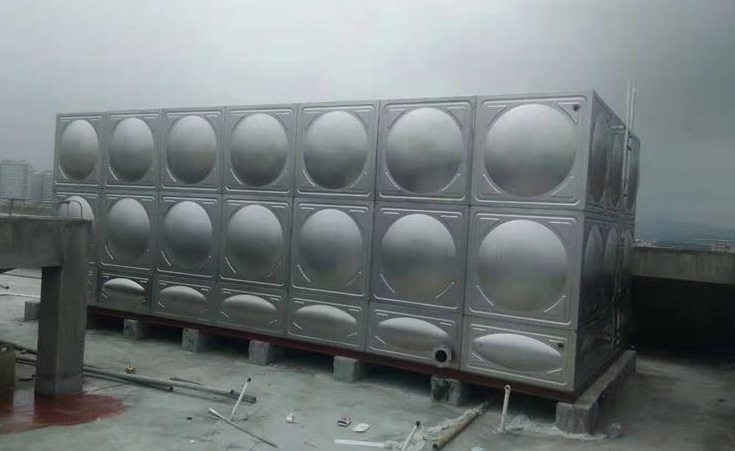
Comprehensive Analysis of FRP Water Tank Production Process: Precision Manufacturing from Mold to Finished Product
Fiber Reinforced Plastic (FRP) water tanks are core components in modern water supply, firefighting, and industrial storage systems, valued for their superior corrosion resistance, high strength-to-weight ratio, and long service life. The reliability of these tanks is directly determined by the rigor and technical maturity of their production process. Beijing Yuanhui FRP Co., Ltd., with over two decades of specialized manufacturing experience, has established a standardized and refined production workflow. This article provides an in-depth analysis of this complete process, revealing the manufacturing logic behind high-quality FRP water tanks.
I. Preliminary Preparation and Mold Treatment: The Foundation of Quality
The production process begins with the meticulous preparation of the mold. The dimensional accuracy and surface finish of the mold directly determine the tank's geometry and inner wall quality. Beijing Yuanhui typically employs high-precision steel or dedicated FRP molds, with roundness error strictly controlled within ±3mm.
1.1 Mold Cleaning and Release Agent Application
Prior to winding, the mold undergoes thorough cleaning to remove dust, grease, and any residual resin. Subsequently, a high-performance release agent (such as polyvinyl alcohol or wax-based) is applied evenly, usually in 2-3 coats, to ensure smooth demolding after curing and to form a glossy inner surface.
1.2 Resin System Formulation
Based on the tank's intended service environment (e.g., potable water standards, acid/alkali resistance), food-grade unsaturated polyester resin or vinyl ester resin is selected. The ratio of resin to curing agent and promoter must be precise, with an error of less than 0.5%. Beijing Yuanhui's workshop utilizes automated dispensing systems to ensure the consistency of each resin batch, which is crucial for guaranteeing the product's mechanical properties and aging resistance.
II. Core Forming Processes: Combining Filament Winding and Hand Lay-up
The cylindrical shell of the FRP tank is primarily manufactured using computer-controlled filament winding, while the top, bottom, and manhole covers are often produced via hand lay-up.
2.1 Computer-Controlled Filament Winding
This is the core process for creating the tank shell. Continuous roving of alkali-free glass fiber, impregnated with the formulated resin, is wound onto a rotating mandrel following a programmed path and angle (typically combining hoop and helical patterns). Winding tension must remain constant, usually adjustable within the 10-30N range, to ensure thorough fiber impregnation and bubble elimination, achieving a hoop tensile strength often exceeding 250 MPa. Beijing Yuanhui's six-axis winding machines enable precise control of complex patterns, resulting in a uniform structural layer thickness with a deviation of less than 0.5mm.
2.2 Hand Lay-up for Components
For components unsuitable for winding, such as tank covers, bottoms, manholes, and nozzles, hand lay-up is employed. Skilled workers layer cut pieces of glass fiber woven roving or chopped strand mat onto component molds, applying resin and rolling to compact the laminate and remove interlayer air. This process requires significant experience to maintain resin content between 45%-55%, ensuring part stiffness and impermeability.
III. Curing, Demolding, and Post-Processing: Ensuring Stability
The formed part enters the curing stage. Beijing Yuanhui's production floor features a temperature-controlled curing area, typically maintained at 25-35°C. After initial gelation, the part remains on the mandrel for a sufficient time to reach demolding strength, a process usually taking 4-8 hours.
3.1 Demolding and Trimming
Once the required strength is achieved, specialized tools are used to separate the cylindrical shell from the mandrel. The demolded tank blank is then trimmed to remove excess flash and burrs. The ends are ground smooth using angle grinders.
3.2 Post-Curing and Assembly
Trimmed components are moved to a post-curing area for natural curing at ambient temperature for 7-14 days. This allows the resin's chemical reaction to near completion, achieving over 90% of the design strength. Assembly follows: the shell, top, and bottom are joined using food-grade sealant and bolts, and accessories like manholes, ladders, and inlet/outlet pipes are installed. All joints are reinforced and sealed with multiple layers of resin and glass fiber cloth, ensuring overall strength and zero leakage.
IV. Quality Inspection and Final Testing: The Last Line of Defense
Every finished tank must pass rigorous inspections. Beijing Yuanhui's quality control process includes: visual inspection (for bubbles, delamination, cracks), dimensional verification, Barcol hardness testing (typically requiring ≥40), and the critical water-fill leakage test. The tank is filled with water and left standing for 24-48 hours to check for leaks or deformation at all seams and joints, with deformation required to be less than 1% of the tank height. For potable water tanks, sanitary approval certificates for the resin materials are also provided to ensure water safety.
Conclusion
The production of FRP water tanks is a systematic engineering project integrating materials science, mechanical automation, and artisan experience. Every step, from mold preparation and winding to curing control and final inspection, directly impacts the product's ultimate performance and lifespan. Beijing Yuanhui FRP Co., Ltd. ensures that each tank leaving its factory possesses exceptional structural integrity and long-term reliability by deeply integrating standardized processes with a stringent quality control system. Understanding this complete workflow helps users better recognize the process value and quality commitment behind the product when making a selection.