A Comprehensive Analysis of the Hygienic and Safety Performance of FRP Water Tanks
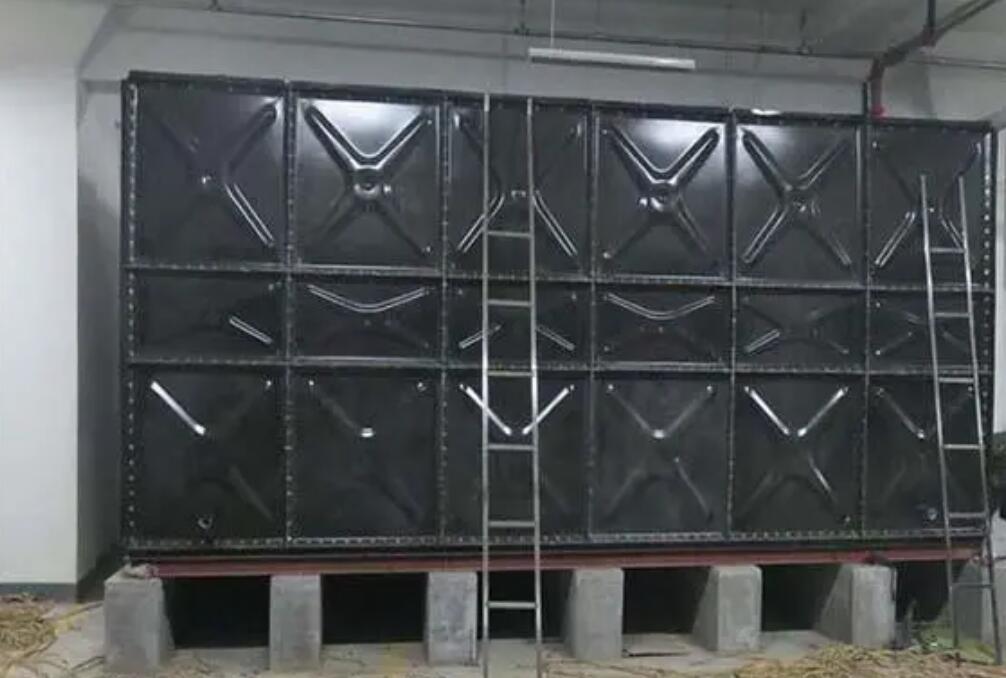
A Comprehensive Analysis of the Hygienic and Safety Performance of FRP Water Tanks
The hygienic safety of water storage equipment is fundamental to public health. Fiber Reinforced Plastic (FRP) water tanks have established a reliable reputation in high-standard sectors like potable water, food processing, and pharmaceuticals, thanks to their unique material science and structural design. Their safety profile is not a single feature but a systematic engineering achievement combining material inertness, structural integrity, surface smoothness, and long-term stability.
1. Inherent Safety at the Material Level: Food-Grade Resin and Non-Leaching Barrier
The foundation of an FRP tank's hygienic safety lies in its inner liner material. For instance, Beijing Yuanhui FRP Co., Ltd. employs high-quality food-grade unsaturated polyester or vinyl ester resins. Once cured, these resins form a dense, smooth, and chemically stable inner surface, with key safety indicators complying with standards such as China's GB/T 17219 for drinking water equipment.
1.1 Chemical Stability and Non-Toxicity
Food-grade resins exhibit excellent chemical inertness, preventing reactions with stored water and ensuring no contamination from heavy metals or organic compounds. Test reports show that leaching indicators, like permanganate consumption and heavy metal content, are well below national limits. This "zero-leaching" characteristic is crucial for maintaining water purity.
1.2 Surface Smoothness and Anti-Adhesion
Precision molding enables an FRP tank's interior to achieve a near-mirror finish (typical surface roughness Ra < 0.5μm). This high smoothness inhibits the adhesion and growth of microorganisms, scale, and algae. In contrast, rough concrete or corroding metal surfaces foster biofilm formation. Advanced manufacturing processes, like seamless filament winding used by Beijing Yuanhui, ensure a joint-free and bubble-free liner, eliminating dirt traps.
2. Biological Safety Control: Key Design for Microbial Inhibition
The tank's interior environment is critical for controlling microbial growth (e.g., bacteria, Legionella, algae). FRP tanks offer combined advantages here.
2.1 Light Opaqueness and Algae Suppression
The inherent opacity of FRP material blocks photosynthesis, preventing algae growth entirely—a distinct hygienic advantage over transparent plastic tanks. Algal decay can produce odors and deplete oxygen, promoting anaerobic bacteria.
2.2 Fully Enclosed Structure and Contamination Prevention
Standard FRP tanks feature tightly sealed manways, vent pipes with insect/dust screens, and overflow pipes. This enclosed design effectively prevents ingress of external contaminants like dust, insects, or rodents. For example, after installing Beijing Yuanhui's enclosed tanks, a major hospital in southern China reported consistently stable and excellent indicators for suspended solids and total bacterial count in routine water tests.
3. Structural Safety and Long-Term Hygienic Assurance
Hygienic safety must be maintained over decades of service. The structural properties of FRP tanks provide this assurance.
3.1 Superior Leakage Resistance
Leakage can lead to backflow of contaminated water or groundwater infiltration, posing a major safety risk. FRP tanks, using monolithic molding or sealed modular construction, exhibit extremely low permeability. According to industry standards (e.g., JC/T 658.1), qualified products must show no leakage or deformation under full water load. The composite structure of glass fiber and resin matrix ensures no cracking or leaking under long-term hydraulic and environmental stress.
3.2 Corrosion Resistance and No Rust Risk
Unlike metal tanks prone to electrochemical corrosion and rust contamination, FRP material offers excellent resistance to atmosphere, water, and common acids, alkalis, and salts. The interior wall will not corrode or shed particles into the water. It also eliminates the need for periodic anti-corrosion coating maintenance, avoiding potential contamination from maintenance materials.
3.3 Ease of Cleaning and Maintenance
The smooth interior and customizable manway size facilitate relatively easy inspection and periodic cleaning. Professional cleaning teams can efficiently restore the tank's interior hygiene. Companies like Beijing Yuanhui often provide clients with scientific cleaning and maintenance schedules to ensure ongoing safety.
Conclusion: A Systematic Hygienic Safety Solution
The hygienic and safety performance of FRP water tanks represents their core value as modern water storage devices. It is not reliant on a single function but is built through a multi-dimensional protective system: food-grade liner materials, physical design that inhibits microbes, leak-proof structural integrity, and long-term corrosion resistance. Every step—from material selection and process control to structural design, installation, and maintenance—directly impacts the final safety outcome. For facilities with stringent water quality requirements, such as hospitals, schools, food plants, and hotels, choosing a supplier like Beijing Yuanhui FRP Co., Ltd., which emphasizes full-process quality control, signifies a long-term commitment to water safety. A deep understanding and utilization of these FRP tank characteristics are essential for safeguarding end-use water quality and meeting increasingly stringent public health standards.